


Dr. Satish Patel - Robotic Knee Replacement in Ahmedabad, Gujarat
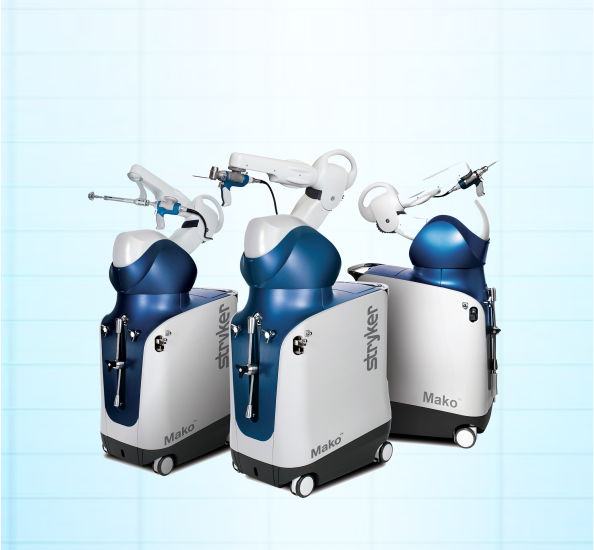
Robotic knee replacement is an advanced surgical technique where a surgeon uses a robotic system to perform a knee replacement with enhanced precision and personalization. The surgeon remains in control throughout the procedure, with the robot acting as a highly precise tool to guide planning and execution.
What is Robotic Knee Replacement?
Pre-Surgical Planning: Advanced imaging techniques, such as CT scans or X-rays, are used to create a detailed 3D virtual model of the patient's unique knee anatomy. The surgeon uses this model to develop a personalized surgical plan, determining the optimal implant size, position, and alignment.
Surgical Assistance: During the operation, the surgeon makes an incision to access the joint. Optical trackers and cameras monitor the leg's position in real-time. The robotic system provides real-time data and visual or haptic (tactile) feedback to the surgeon, ensuring bone cuts and implant placement are precisely aligned with the personalized plan.
Implant Placement: The surgeon prepares the bone surfaces and places the artificial knee components (implants) with the robot's guidance, which helps prevent cutting beyond the predefined areas, thus protecting healthy tissue.and Best orthopedic Hospitalin Ahmedabad.
Post-Surgery Care: Following the surgery, a structured physical therapy plan is initiated to help the patient regain strength and mobility. Most patients can begin walking with assistance within 24-48 hours and typically resume many normal activities within 4-6 weeks in Ahmedabad, Gujarat.
Active (Autonomous) Systems: These robots perform the bone cuts and preparations independently based on the surgeon's pre-operative plan, under the surgeon's supervision. They are highly precise but less common than semi-active systems.
Robotic Knee Replacement Package in Ahmedabad, Gujarat, Rajasthan
Semi-Active Systems (Robotic Arm-Assisted): The surgeon holds and controls a robotic arm or handheld cutting tool. The system provides guidance and uses haptic (tactile) feedback to create a virtual boundary, preventing the surgeon from cutting outside the pre-planned area and protecting healthy tissue.
Superior Alignment: Meta-analyses consistently show that robotic-assisted surgery achieves superior post-operative anatomical and mechanical alignment of the implant compared to conventional methods. This precision is expected to reduce wear and tear, potentially increasing the implant's lifespan.in Ahmedabad, Gujarat, Rajasthan.
Robotic Knee Replacement in Ahmedabad, Gujarat, Rajasthan
Long-Term Function: While robotic surgery ensures better alignment, current long-term studies (5-10+ years) show similar clinical and functional outcomes (e.g., pain scores, range of motion) to well-performed traditional surgery. The main benefit is the consistency and reduction in "outliers" (cases with significant alignment deviations).
Superior Alignment: Meta-analyses consistently show that robotic-assisted surgery achieves superior post-operative anatomical and mechanical alignment of the implant compared to conventional methods. This precision is expected to reduce wear and tear, potentially increasing the implant's lifespan.
Orthopedic Surgeon

Dr. Satish Patel
M.S. , F.R.C.S.